
It can be difficult for small to medium-sized businesses to make high-quality demonstration videos because of the high costs of filming equipment, actors, location rentals, and post-production costs. However, because of generative AI technology, this barrier to producing demonstration videos is fading away quickly.
With only product photos, descriptions, and prompts, it is now possible to have artificial intelligence automatically create high-quality professional-looking product demonstration videos. The entire process from start to finish can take less than a few minutes, including custom branding and dynamic camera shots with multiple scene transitions.
This article will detail why AI-generated product demonstration videos are an emerging trend in marketing, provide a brief overview of the most common AI video generators available today, and suggest actionable suggestions on how to enhance the video maker ai rates of your product content so that you can utilize these lower-cost video solutions to better compete.
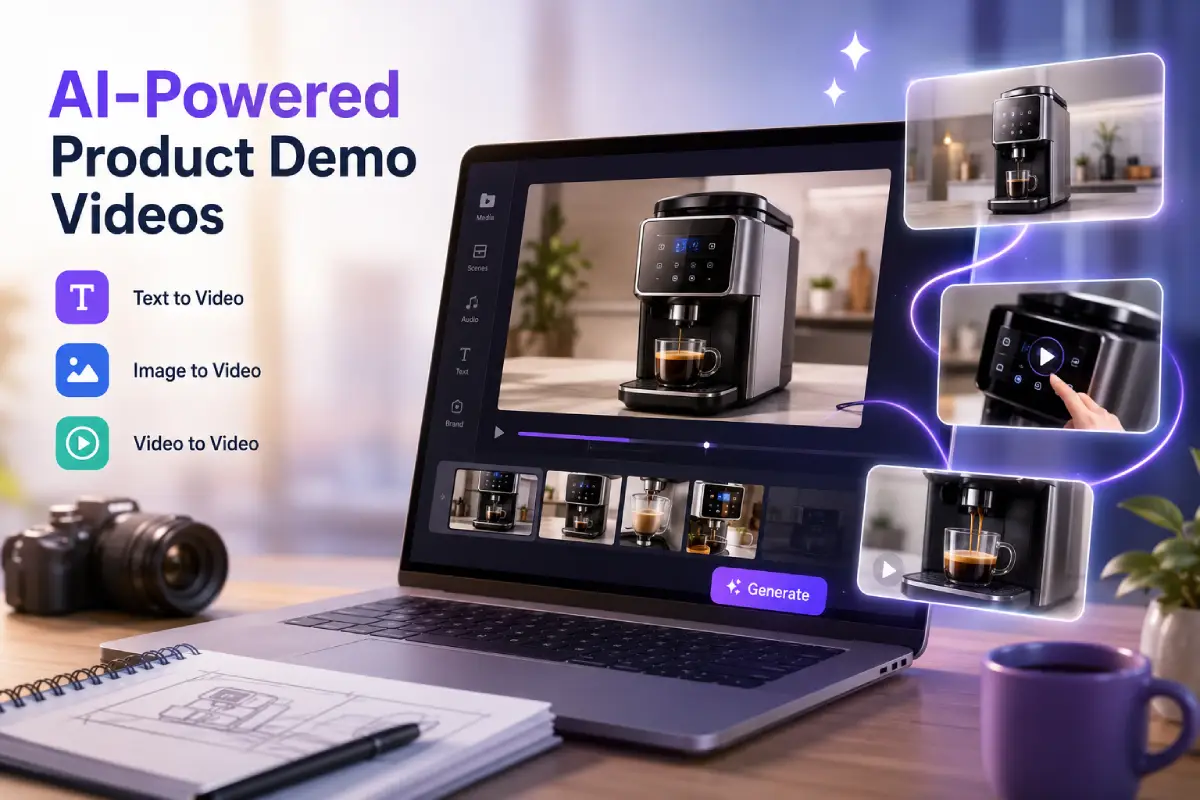
Why Are AI Product Demonstration Videos More Efficient Than Traditional Production Methods?
There is an increasing difference in effectiveness between classical video production and AI product demonstrations. This rapid increase in usage of AI tools by businesses and creators is easy to explain.
Hidden Costs of Traditional Product Demonstration Video Production
When creating a video as a demonstration of the product, the initial cost will not just be one take of that video but all the associated costs that go with it. These costs include items such as equipment purchases, rental rates for the location the video will be shot, costs associated with hiring an actor to do the narration, and post production editing; each one of these can add up quickly to create a cost overrun.
Companies that are continually updating their product information will find that the cost of maintaining the product demonstration video will greatly exceed the cost of making a one-off demonstration video.
For example, if you release a new version of a product with new features updated on the interface or if a feature was enhanced to work better than before, you would need to fill out another product demonstration video if you have an abundance of SKUs or a new software team that iterates quickly.
Because of how companies will move into using their old product demonstration video for an extended period of time, they will save money in remake costs, but inaccurate information could negatively impact user behavior and cost the company, potentially resulting in a lost opportunity to convert that customer into a purchase.
As the content creation environment changes rapidly, traditional methods of producing product demonstration videos are facing unprecedented challenges.
How Can AI Compress Product Demonstration Video Production From Weeks to Minutes?
AI-powered product demo tools are revolutionizing the efficiency of creating videos. AI can rapidly create professional-quality product demo videos by automatically analyzing images, text prompts, and information from the product interfaces. Consequently, production cycles have become much shorter.
Some of the most significant factors contributing to these efficiency gains include:
- With just one click create an authentic and fluent narration using AI, quickly accessing new markets around the world.
- Intelligent editing automatically improves voice quality and pacing, saving time by performing less tedious post-production work.
- Flexible content editing methods allow you to quickly make changes to your products and marketing materials related to new products.
Due to the adoption of AI video generation workflows, many organizations have lowered their costs for producing product demonstration videos.
With traditional ways of making these videos requiring high investments for film production and post-production, organizations can now produce videos with AI video generator
tools that allow teams to produce low-cost, fast-turn around video content with an inexpensive monthly subscription. This enables teams to test new ideas at an increased pace and produces more content at scale.
Why Are Marketers And Amazon Sellers Turning to AI Video Generators?
Velocity has become one of the primary advantages for e-commerce sellers and marketing teams. Productivity through new product launches, promotional offers, advertising, social media management, etc., all require new video content being produced continuously at varying speeds. The traditional methods for producing video have often been challenged when trying to keep pace with the increasing number of videos required to support successful e-commerce endeavors.
When compared to traditional written descriptions, consumers now gravitate towards understanding what a product is all about by seeing an intuitive video rather than a long written description. The typical product demonstration video is much easier to engage with because it provides an immediate visual reference and aids in helping people to purchase the item than written textual information.
This shows why there has been an explosion in the popularity of AI-generated videos. Businesses no longer must schedule individual shoots and edit separate video pieces for each product; they simply upload pictures or textual descriptions to create professional-quality videos quickly. As a result, companies now have more products available for sale, more channels for sale, more selling channels, and more types of marketing efforts that collectively support successful e-commerce businesses.
The AI Video Generator Offers Three Modes: Text to Video, Image to Video, and Video to Video
AI Video Makers allow their users three main options for generating videos, based on the user’s level of expertise and desired outcome: Text into Video, Image into Video, and Video into Video. The AI Video Maker provides various Generation Modes, but these three cover most of the creative needs of people wanting to create videos, allowing them to either create entirely new video content from scratch or to optimize and repurpose previously created video content.
Text to Video
Currently, one of the most frequently used ways to develop videos using AI is through a text-to-video interface. Users can input their description into the system and it will create a video for them containing elements such as scene, character, action and even genre.
This mode of content development lends itself well to businesses looking for proof of concept, as well as prototype or creative directors developing new advertisements. For those who do not have source material, this type of system gives them the ability to rapidly turn their ideas into animated video and not have to obtain production or design resources.
Image to Video
Using photo to video ai, you can create an animated video by simply uploading an image or image series from your product, character, or photo. The AI will then automatically add camera movement, movement of characters/objects, light changes, and dynamic scene effects to create a fully animated product demonstration video in real-time.
For this reason, Image to Video is one of the most popular tools for product developers, as they can now produce professional quality demonstrations of their products directly from product images without ever having to shoot new video content, saving them time & money on creating content and allowing them to be much more efficient at producing quality video content.
Video to Video
Video to Video helps you to stylize and enhance the look of your videos while keeping the original construction intact. Using AI technology, you can create a completely different look on an ordinary video by applying cinematic, anime, 3D and many more creative effects.
This mode is great for creating and updating your existing content. You can create a completely new look for your videos without having to re-shoot them, thus increasing the amount of time your products will be usable and improving the attractiveness of your content.
How to Choose the Right Mode?
If you are attempting to create a video from your own original idea then text to video ai generator is normally your best option; but if you have already created design or image assets for your product then Image to Video is usually going to help you to generate marketing material faster (by allowing you to use your design/image assets in an effective way); and if you currently have video assets (that were created either by you or by someone else) then Video to Video provides you with the most flexibility for converting and optimizing existing video content.
AI video generators using all three of these modes can encompass the complete creative process—from creativity to content optimization—while at the same time helping to accelerate, increase efficiency, and facilitate creativity in the video production process.
Create Customized Product Demonstration Videos Using An AI Video Generator
Users can make use of “ready” video templates to help them create product demo videos very quickly however, often the way the actual instruction for completing the template is constructed has more impact on how engaging or different the end result will be. Many times with video generated through AI, the prompt will not only determine what the video will show, but will also have an impact upon camera movement during the video, the environmental setting of the scenes in the videos, visual aesthetic of the video and overall expressiveness.
In general a good video prompt should include 4 basic components; subject, action, scene and style. Subject is the main content of the video, Action describes how a shot or object is being changed, scene creates the atmosphere of where the environment is created, style creates the final visual appearance of the total video.
Due to the lack of details provided about a coffee machine in a simple description prompt (i.e., only providing a brief phrase such as, “Show me how to operate my coffee machine”), the resulting AI-performed demonstration would be very general and only produced a video showing the operation of the coffee machine. However, by refining the description prompt to include all of the new prompts stated above (i.e., specifying that a smart coffee machine must be demonstrated in a modern kitchen with a suitable camera angle and proper lighting and depth-of-field effects), the AI can now generate a video demonstrating the smart coffee machine using a different narrative-based approach.
Therefore, the specific examples used for a product demonstration video(s) will have a direct correlation with the AI-generated final product(s). When creating videos using an AI-based system, it is critical to provide the AI system with a detailed description of the product including, but not limited to, the following details: description of the product; camera language; scene type; lighting type; lighting effect(s); intended style; etc. This level of detail will lead to higher-quality, more professional, and ultimately more aesthetically pleasing final products.
The following tips can help you fully unleash the potential of AI video generators and create more professional and engaging product demonstration videos.
Designing a More Expressive Visual Language
The majority of the users only consider the product’s description and do not realize how important the design of the camera can play in the overall professionalism of a video. Many, in fact, do not attached any significance to camera movement, however, the camera moving in a certain way can create additional depth to the presentation of the product and help to align it better with the overall look of the commercially produced advertisement, such as zooming in or out, scanning from left to right, tracking right to left, etc.
Enhancing the Realism of Product Presentations
Video demonstration of products should not only demonstrate the product but also improve it through visual appeal by utilizing different environments and details. Examples include using office, modern home or technology showroom environments; metallic reflections, glass texture, or fabric pattern detail will all help improve the realism and immersiveness of the video.
Lighting Techniques to Enhance Product Visual Quality
Light plays an important part in the quality of the image. For example, when describing the use of soft natural light, side fill light and backlighting/rim lighting; it is more effective to list them as examples of lighting because this gives the viewer’s eye the same representations of how the lighting enhances the detail of the product in a sophisticated way.
Setting a Clear End Point for Camera Movement
The camera movement should not wander aimlessly. For example, whether rotating the product or zooming into the product with a camera, there should be a defined end to the movement through a final focusing on either the brand logo, areas of core functions, or a close-up of product, therefore making the pacing of the demonstration video more complete and allowing the viewer’s attention to be drawn to information most relevant to them.
Utilizing Negative Cueing to Optimize Generation Results
AI can use negative cueing words to assist it in preventing issues like blurry images, chaotic backgrounds or distorted products, and odd details from being included in video files. When people are present in the video files, this will also reinforce natural movement, correct proportions, and detail, which will help the AI generate more consistent results.
Principles for Writing Effective Cueing Words
Longer cueing words do not usually produce a better result. In the vast majority of cases, a short number of words accurately describes the following core elements: product, the action being demonstrated, where and how to use it, camera movement, and lighting effects. Short, concise, and focused cueing words tend to assist the AI in producing video content that meets your expectations.
Conclusion
With advancements in AI video creation, you no longer need a team of professionals, costly equipment, or an extensive period of production to make Top Quality Product Demonstration Videos. Today’s AI Video Generators (Text to Video, Image to Video, and Video to Video) allow businesses and creators to easily and economically create impressive visual content based on any idea they have in mind, often in a much shorter amount of time.
AI Improves Video Production Efficiency and Enables Companies to Create (and Update) Multi-Product Demonstration Content at Scale by Utilizing Other Factors Such as Cue Words, Shot Design, Scene Details, and More to Help Create Videos That Much More Closely Match Your Brands, and therefore have a greater Chance of Winning Over Your Audience.
Now is the Perfect Time to take advantage of AI Video Generators for more Efficiently Presenting Your Products, Promoting Your Brand, or Increasing Your Marketing Effectiveness; Start with a Simple Idea, and let AI Help You Create Your Next Exciting Product Demonstration Video!



Add Comment