
A head of digital at a global consumer brand walked me through the post-mortem on a nine-month program that shipped a system nobody used. He flew to Atlanta for kickoff, met the partner who had led the pitch, and shook hands with two experts whose books he had actually read. Six weeks in, the partner disappeared from the standing meeting. The head of digital signed the deck. The bench signed the code.
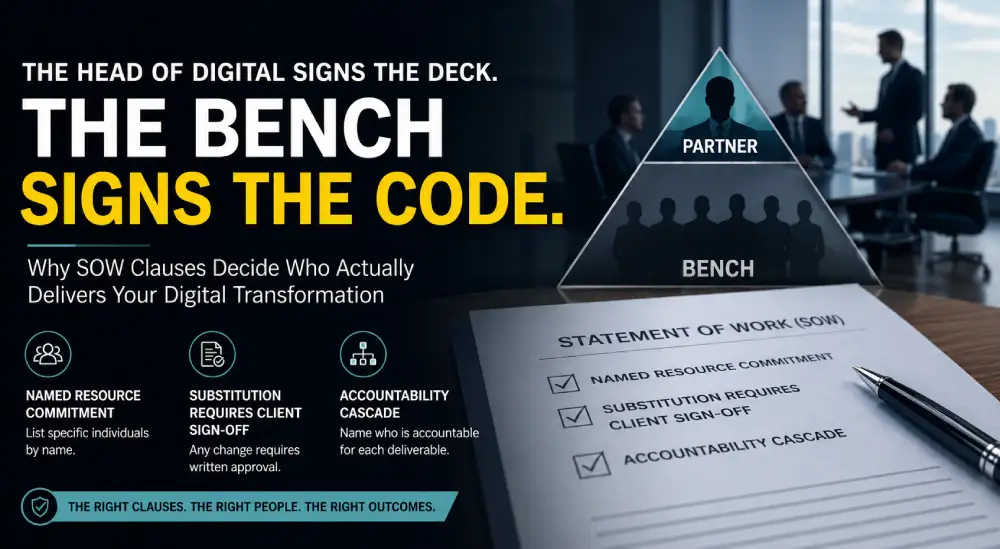
The arithmetic of the SI labor pyramid
The bait-and-switch is arithmetic. A partner-level principal cannot be deployed across twelve concurrent engagements. The firm margin depends on deploying that partner at the pitch and building the rest with junior analysts.
Three clauses that change this
Named resource commitment: the SOW lists specific individuals by name. Substitution requires client sign-off: any change requires written approval. Accountability cascade: the contract names who is accountable for each deliverable.
The question that reveals the staffing model in the first scoping call
Before the proposal stage, ask the vendor to read the resource substitution clause in their standard SOW. The language is the only binding commitment in the engagement.
For heads of digital scoping enterprise partners, the three SOW clauses above separate teams that name their experts from teams that will not. To see how Digital transformation consulting structured around outcome-staked delivery keeps senior consultants on the engagement from kickoff through week fifty-two, start with the substitution clause framework at Future Works.
Matt Leta, Managing Partner, Future Works.








Add Comment